
Square vs Staggered Wheels: Pros, Cons & Fitment Guide
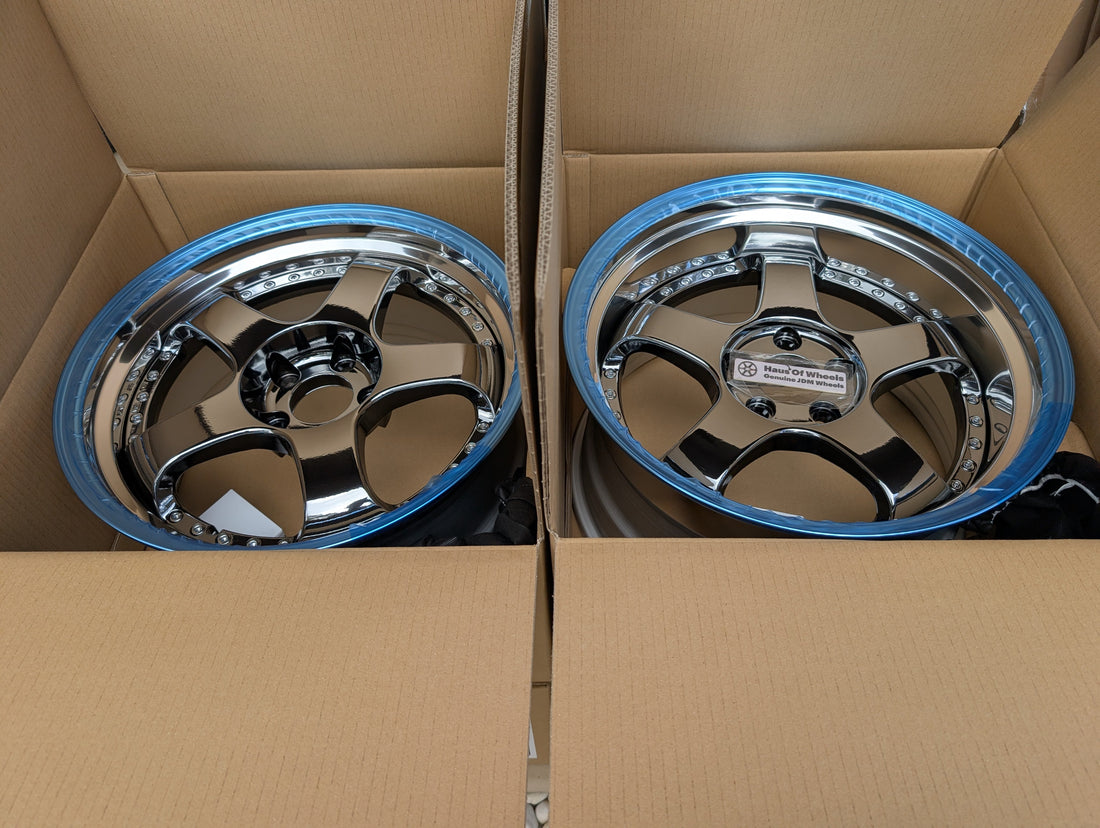
A square wheel setup uses the same wheel and tyre size at all four corners. A staggered setup uses a different front and rear size, most commonly a wider rear wheel and tyre. Both layouts can be correct depending on the vehicle, drivetrain, suspension and intended use.
What is a square wheel setup?
With a square setup, all four wheels share the same diameter, width and usually the same offset. Tyres are also normally the same size front and rear.
Potential advantages include easier tyre rotation, simpler spare or replacement planning, and consistent front-to-rear sizing. Square setups are common on many front-wheel-drive, all-wheel-drive and track-focused cars where tyre rotation and balanced sizing are priorities.
What is a staggered wheel setup?
A staggered setup uses different front and rear wheel widths and/or tyre sizes. A typical example might use a 9-inch front wheel and a 10-inch rear wheel, although exact sizes vary greatly between platforms.
Staggered layouts are common on many rear-wheel-drive performance cars and on vehicles that left the factory with wider rear tyres.
Square setup: potential benefits
- Front and rear tyres can often be rotated to spread wear more evenly.
- Buying replacement tyres can be simpler because all four are the same size.
- There is usually more flexibility to move wheels between positions.
- It may suit vehicles that benefit from equal front and rear tyre capacity.
The main limitation is that a square size must physically fit both axles. On some cars the rear can accept substantially more wheel and tyre than the front.
Staggered setup: potential benefits
- Allows additional rear tyre width where the chassis provides more rear clearance.
- Can retain a factory staggered philosophy on vehicles designed around different front and rear tyre sizes.
- Can produce the desired visual balance on cars with wider rear guards.
- May be appropriate where vehicle dynamics, power delivery and manufacturer design call for different axle sizing.
The trade-off is reduced tyre-rotation flexibility, and replacement tyres may need to be managed as separate front and rear sizes.
AWD vehicles need extra care
On all-wheel-drive vehicles, front and rear rolling circumference can be important. A staggered setup can still be possible on some AWD platforms, but the tyre sizes need to be selected so the rolling diameters stay within the vehicle manufacturer's acceptable range.
Do not assume that two tyres with different printed sizes have an acceptable rolling-diameter relationship. Check manufacturer specifications for the exact tyre model and confirm the vehicle's AWD requirements.
Does staggered mean better grip?
Not automatically. Overall grip depends on tyre compound, tyre width, pressure, alignment, suspension, load transfer and road conditions. A wider rear tyre can provide greater potential rear tyre capacity, but simply making the rear wider does not guarantee a better-balanced car.
Likewise, a square setup is not automatically superior. The best layout depends on the vehicle and intended use.
Examples of vehicles where staggered fitment is common
Rear-wheel-drive performance platforms such as the Toyota Supra A80, GR Supra A90/A91, BMW F80 M3/F82 M4 and Nissan Z-family cars are often considered with staggered sizing. Many Subaru, Mitsubishi and front-wheel-drive performance applications are commonly considered with square setups, although there are exceptions.
Wheel width and offset still matter
Whether the setup is square or staggered, each axle needs its own clearance check. Compare width and offset together, not separately. Read our wheel width guide and offset guide before comparing setups.
Which layout should you choose?
Use the vehicle's factory configuration and known fitment data as the starting point. Then consider tyre availability, rotation needs, suspension, brakes, power level, intended use and the wheel styles available in suitable sizes.
Browse current wheel options and the HausofWheels vehicle fitment guides before ordering.
Fitment and tyre requirements vary by vehicle. AWD and high-performance vehicles can be sensitive to rolling-diameter differences, so confirm the complete wheel and tyre package before purchase.